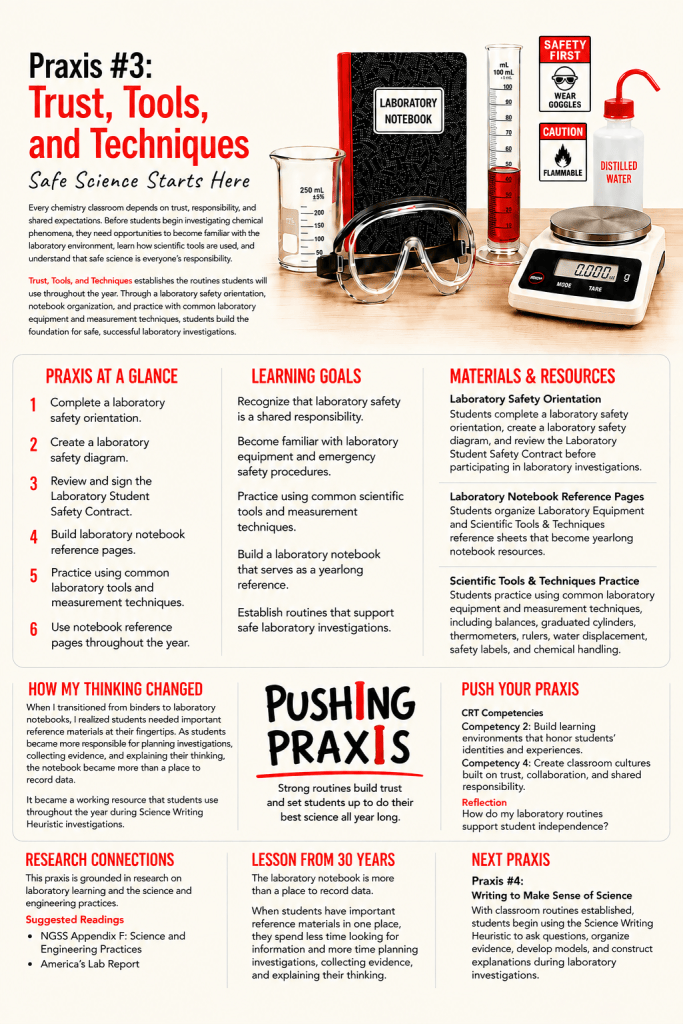
Praxis #3 Trust, Tools, and Techniques-Teaching Lab Safety and Scientific Skills

Students need to know more than the names of laboratory equipment. They need to know how to use laboratory equipment, apply scientific tools and techniques, and work safely. This Praxis helps students build reference pages they can use throughout the year as they learn how to do science.

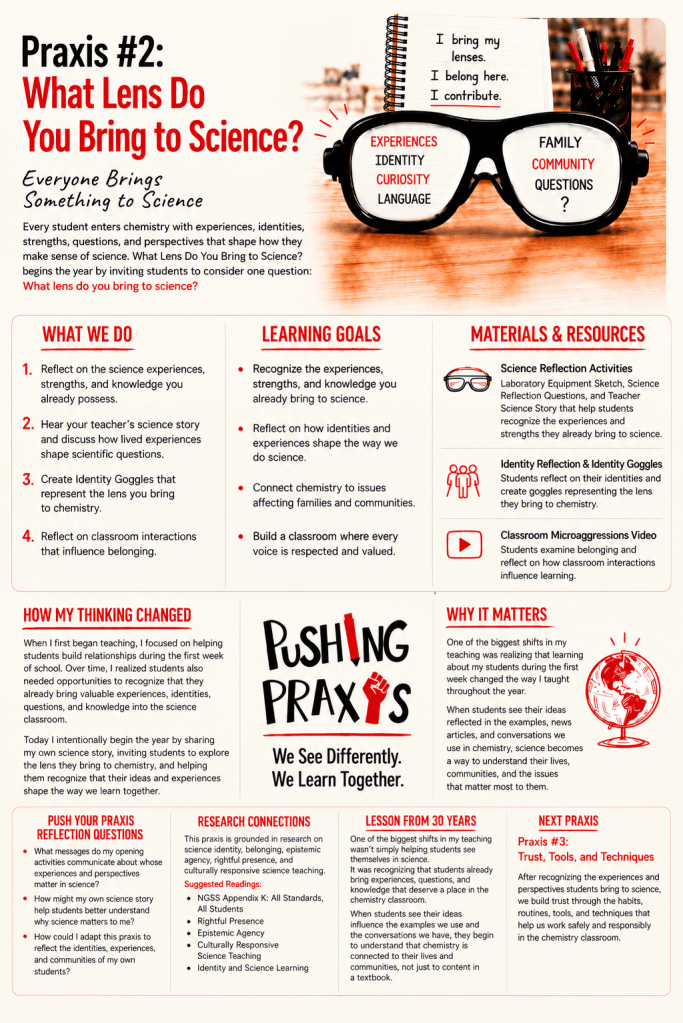
Praxis #2: What Lens Do You Bring to Science?-Exploring Identity and Belonging in the Science Classroom

The first week of school establishes more than classroom routines; it communicates who belongs in science and whose experiences matter. This Praxis shares the reflection activities I use to help students recognize the strengths and identities they already bring to chemistry and begin building a classroom where every voice is valued.

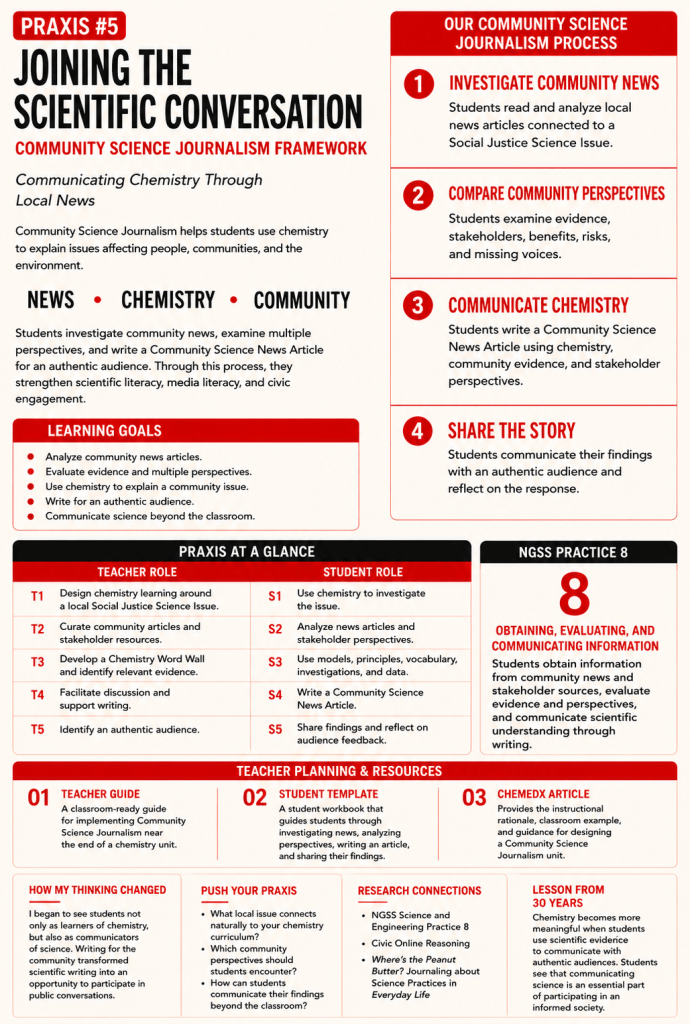
Praxis #5 Joining The Scientific Conversation-Community Science Journalism in the Classroom

Students use chemistry to understand and communicate issues affecting people, communities, and the environment. The Community Science Journalism framework transforms local news from information students consume into scientific evidence that students analyze and explain through the lens of chemistry. By connecting laboratory investigations, scientific models, scientific principles, vocabulary, and data to community news and stakeholder perspectives, students communicate scientific understanding to authentic audiences while developing scientific literacy, media literacy, and civic engagement.

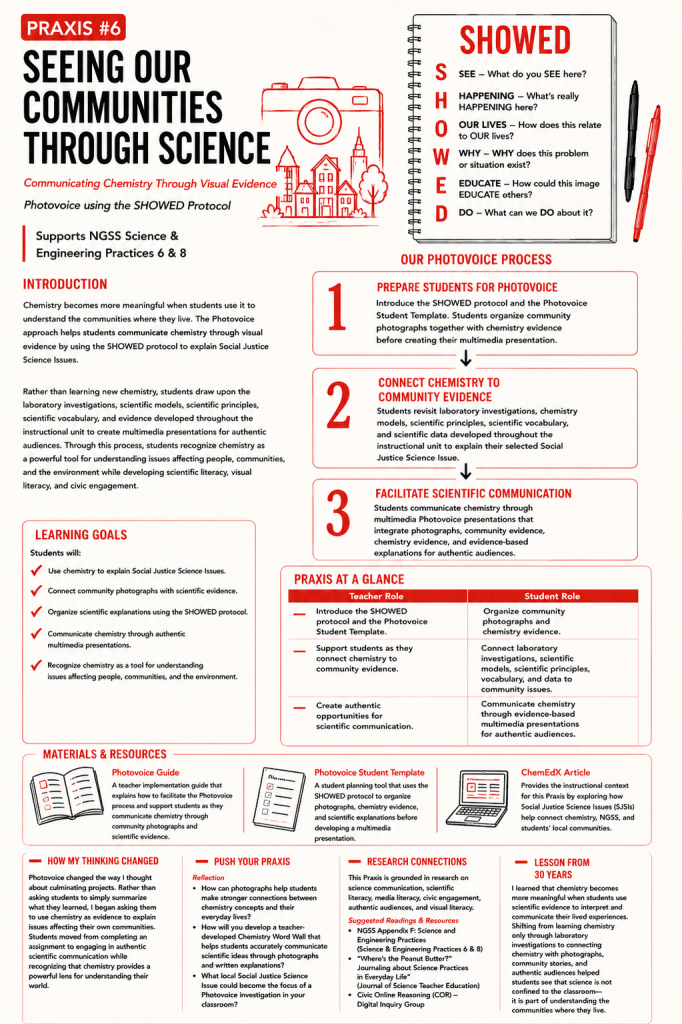
Praxis #6: Seeing Our Communities Through Science-Using Photovoice in Science Education

Students use chemistry to understand and communicate issues affecting people, communities, and the environment. The Photovoice framework transforms photographs from simple images into scientific evidence that students analyze and explain through the lens of chemistry. By connecting laboratory investigations, scientific models, scientific principles, vocabulary, and data to visual evidence, students communicate scientific understanding to authentic audiences while developing scientific literacy, visual literacy, and civic engagement.

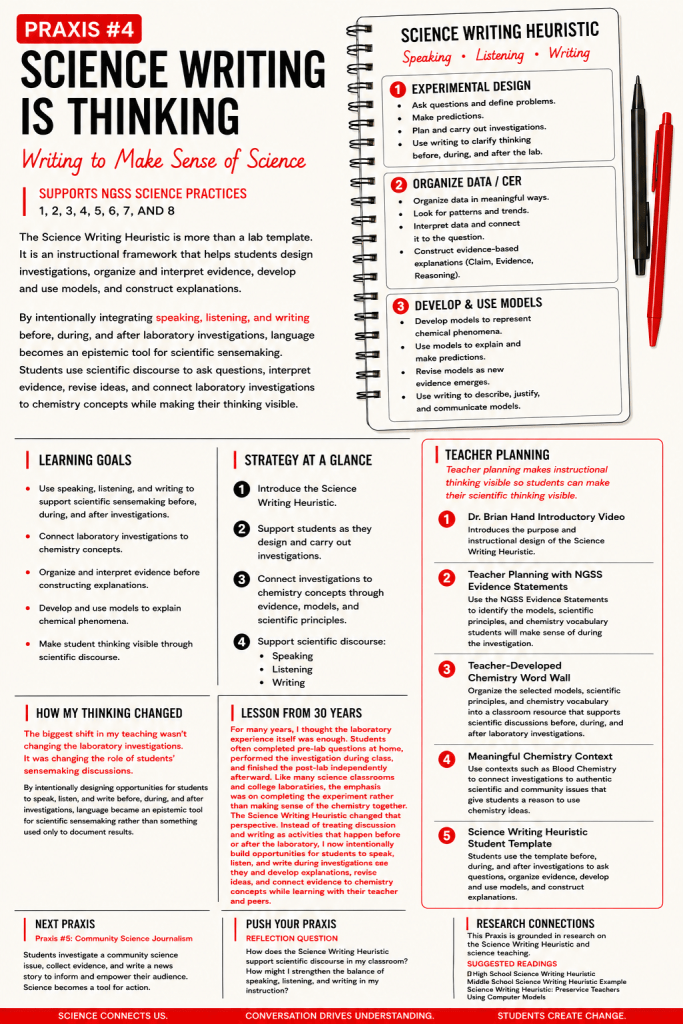
Praxis # 4: Science Writing Is Thinking-Using the Science Writing Heuristic for Sensemaking

Students make sense of chemistry by writing before, during, and after laboratory investigations. The Science Writing Heuristic (SWH) transforms a laboratory report from a mere record into a tool for questioning, designing investigations, collecting and organizing data and evidence, developing and using models, constructing scientific explanations, and making student thinking visible, changing both how students learn chemistry and how teachers understand student learning.

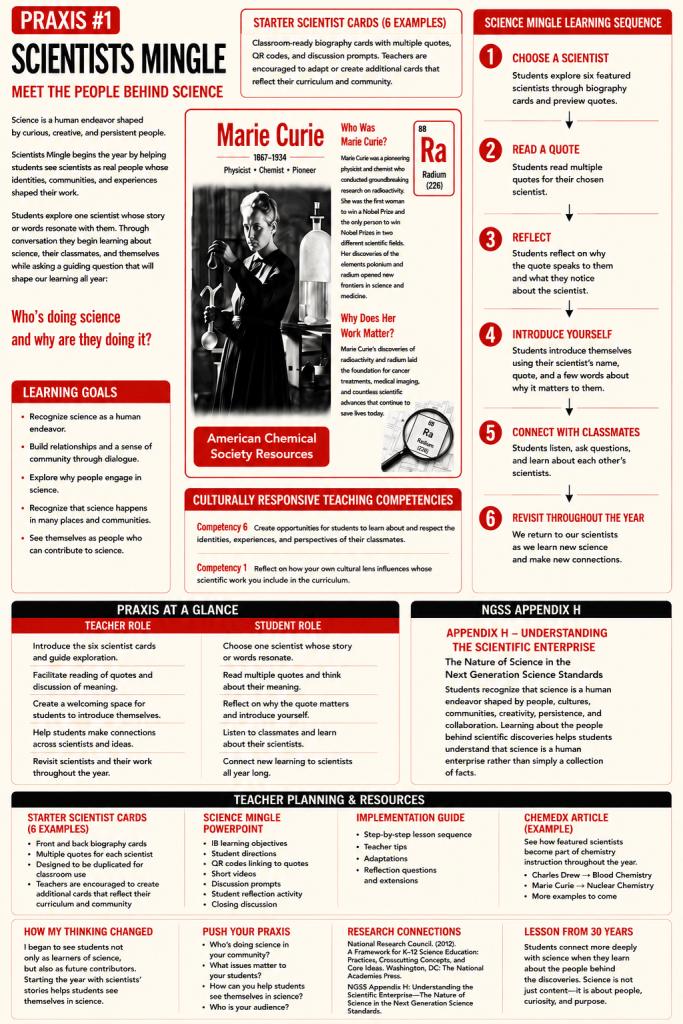
Praxis #1: Scientists Mingle-A First-Day Science Activity for Building Belonging

For more than 30 years, I’ve returned to one question: What messages do my first-day activities communicate about science, learning, and belonging? This first Praxis shares the Scientists Mingle activity that has helped me build community and invite students into science from day one.

Pushing Praxis Podcast Javier Payano & Elaina Huang: Humanizing Our Students and Ourselves through Music for Social Change

Just a few years ago, Javier Payano was Elaina Huang’s music teacher. In this interview, we learn about how Javier invited Elaina and their peers to bring their authentic selves into the music classroom through the lens of human values. Elaina now continues this work in their post-secondary studies so that more young people get an education that acknowledges and celebrates all parts of who they are. They present a welcome departure from educational models based on industrialization and colonization. Javier and Elaina invite us all to experience learning in a fuller, more humanizing way through music, community, and joy. Listen to both the student and teacher perspective in this grounding conversation with Javier and Elaina… 

Check out more about the work Javier and Elaina do by checking out Human Values Collective on facebook, instagram, and twitter or by following their podcast.
Tiffany Childress-Price and Dr. Mindy Chappell: Youth Participatory Science & Student Power

Tiffany Childress-Price and Dr. Mindy Chappell discuss their learning around using Youth Participatory Science in their classrooms for the past five years. What role does history play when students dig into how heavy metals such as lead impacts communities in Chicago? How do we center students’ lived experiences while making sure they get access to knowledge and analysis that’s withheld from them? Even if you’re not a science teacher, this episode is for you if you want to learn about the process of student-driven inquiry and investigation to humanize young people and build their skills and power for the long-haul.

Scholars and resources that Tiffany & Dr. Mindy referenced in this conversation: 

Youth Participatory Science to Address Urban Heavy Metal Contamination

Daniel Morales-Doyle: Youth participatory science: a grassroots science curriculum framework

Megan Bang & Shirin Vossoughi: Participatory Design Research and Educational Justice: Studying Learning and Relations Within Social Change Making

Jhoanna and Anna: Black Panther Party & Curriculum Circles at CPS Sustainable Community Schools

In this conversation, Jhoanna Maldonado and Anna Acosta orient our work in curricular questions that are deep and community-centered. Where is radical love in our schools? Who’s represented in our units? How do we search for answers to critical questions with our students and their families? How do we make change at both systemic and classroom levels so we can support students, families and communities as critical thinkers and actors? If you’re interested in learning some of the answers to these questions, take some guidance from Jhoanna and Anna. Take a listen… 

Resources that Anna and Jhoanna discussed in this conversation: